Construction Methods of Measurement – NRM 3
The Royal Institute of Chartered Surveyors (RICS) have developed and published a suit of documents titled the New Rules of Measurement or NRM for short. There are 3 volumes that make up the New Rules of Measurement. We have videos and blogs covering NRM 1 which covers the order of cost estimating and cost planning for capital building works and NRM 2 which details rules and guidance around detailed measurement for building works, specifically focusing on Bill of Quantities. This blog and video is going to provide a summary of what NRM 3 is and what it was developed for. NRM 3 is titled: “Order of cost estimating and cost planning for building maintenance works”. Unlike NRM 1
Construction Methods of Measurement – NRM2
The Royal Institute of Chartered Surveyors (RICS) have developed and published a suit of documents titled the New Rules of Measurement or NRM for short. There are 3 volumes that make up the New Rules of Measurement, NRM 1, NRM 2 & NRM 3. This blog is going to provide a summary of what NRM 2 is and what it was developed for. If you would like to obtain a brief overview of the history of methods of measurement for construction and a brief overview of the 3 NRM volumes that are used today, then please takea look at our “construction methods of measurement – explained” video and blog that can be found on this website or Youtube. NRM 2 is titled: “Detailed measurement for building works” and deals with Bill of Quantities (BoQs), all aspects of them! So, if you do not know what a Bill of Quantities is or the benefits ofthem, then we would highly recommend watching our “Bill of Quantities explained” video or reading our blog for a brief overview. But, to speed things up, the main purpose of a Bill of Quantities is to provide a list of items alongside their descriptions and quantities, that are required to complete a construction project. Contractors & Subcontractors are then able to attribute their price to each aspect of the works – resulting in a total cost for the construction project. NRM 2 replaced the Standard Method of Measurement for Building Works in 2013, which was also published
Construction Methods of Measurement – NRM 1

The Royal Institute of Chartered Surveyors (RICS) have developed and published a suit of documents titled the New Rules of Measurement (NRM). There are 3 main New Rules of Measurement, NRM1, NRM2 & NRM3. This particular blog is going to focus on NRM 1 and provide a summary of what it is and what it was developed for. If you would like to obtain a brief overview of the history of methods of measurement for construction and a brief overview of the 3 NRM volumes that are used today, then please takea checkout our “construction methods of measurement – explained” video on youtube or take a look at the blog on our website under the same name. NRM1 is the order of cost estimating and cost planning for capital building works. The first edition was
Construction Methods of Measurement – Explained!

Brief History: Method of measurements have historically always been produced in order to provide the construction industry with a standard
Cost Value Reconciliation (CVR) Explained

Cost Value Reconciliation or CVR for short, is a tool used during a construction project. Typically carried out once a
What is a Construction Final Account?

Quantity Surveyors have the quite unique position of being required for all stages of a construction project, be it pre, during or post the actual construction of a building or road and everything in between. One of the quantity surveyors key and crucial responsibilities comes after a construction project has been completed in the form of a final account. This may be a term you have heard before but what exactly is a final account? Well, if this is what you want to find out, you are in the right place! Final accounts are an important commercial milestone in any construction project. They signify the agreement of the final amount
What Is A Construction Takeoff? Free Dimension Paper Download!

One of the very first skills you’ll come across when studying quantity surveying is how to perform a construction takeoff.
Applications for Payment (AfP)
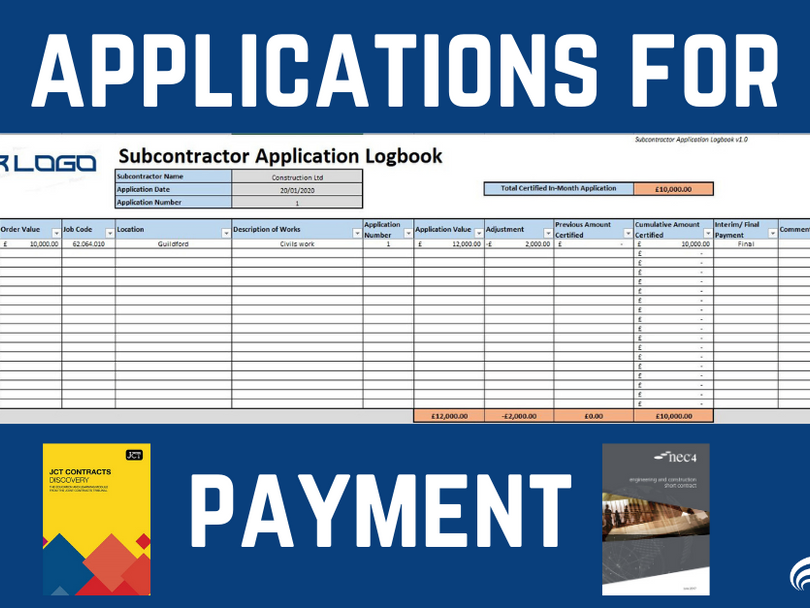
No matter which type of contract your organisation is working under, Applications for Payment (AfP) are an essential part of
Site Records – What Are They & Why Are They So Important?
Site Diaries, Daily Record Sheets, Job Packs, Site Field Reports… whatever your company, client, or subcontractor calls them, the importance
Bill of Quantities – Explained
The Value of a Bill of Quantities (BoQ) Appointing a Quantity Surveyor (QS) to produce a Bill of Quantities (BoQ)