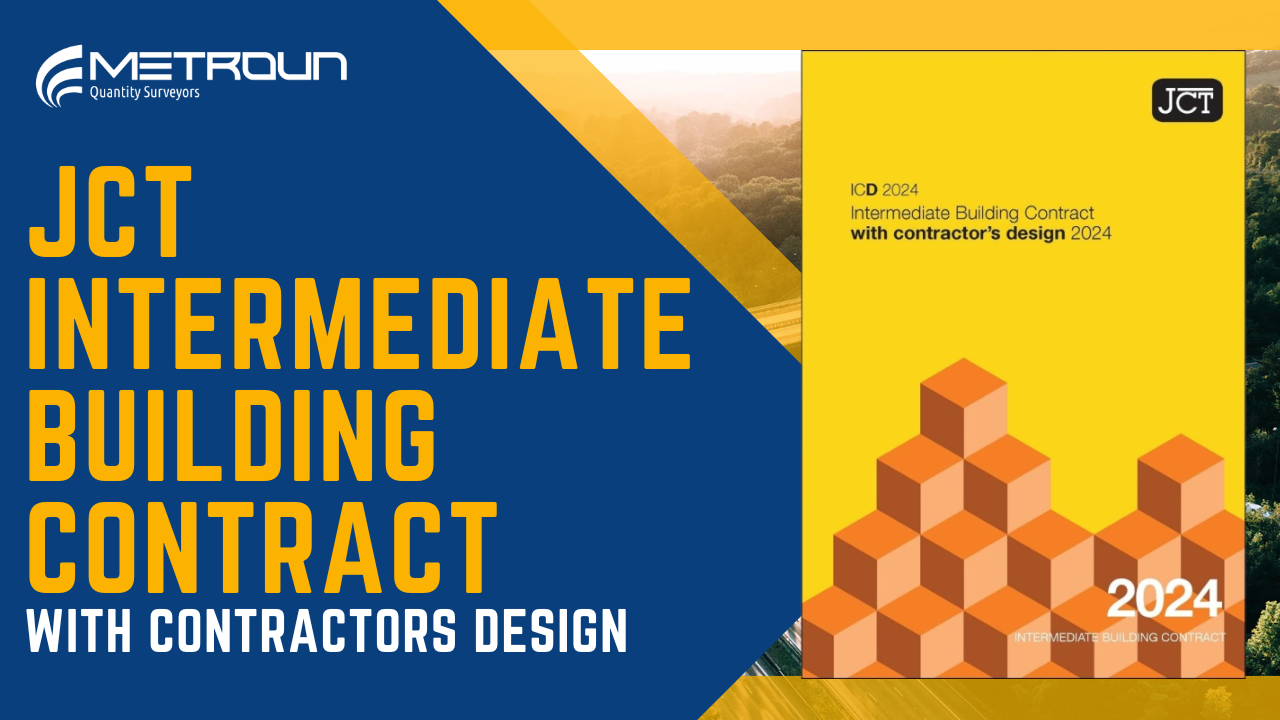
The Joint Contracts Tribunal (JCT) plays a central role in the UK construction industry, providing a suite of standard contracts and procurement processes that help balance risk and define responsibilities.
The very first JCT standard form of contract was published in 1931, although it wasn’t until 1977 that the name “JCT” was formally adopted. Today, the 2016 edition remains the most current and widely used version across the industry.
Why JCT Contracts Matter
Every construction project carries risks: delays, cost overruns, design issues, or disputes. JCT contracts aim to clearly define roles and obligations between clients, contractors, and consultants, ensuring that everyone understands their responsibilities and that risks are managed fairly.
The Three Main Procurement Processes
The JCT suite recognises three key procurement routes:
1. Traditional Procurement
Still the most widely used, this method separates design and construction.
- The client appoints consultants to design the project and prepare tender documents (drawings, schedules, bills of quantities).
- Contractors then bid competitively to construct the project.
- The contractor is not responsible for design (except temporary works or specific elements agreed in the contract).
2. Design & Build
Here, a single contractor takes on both design and construction responsibilities.
- The employer sets out requirements.
- The contractor delivers everything—design, planning, organisation, and construction.
- This route often speeds up delivery and provides a single point of responsibility.
3. Management Procurement
Instead of directly delivering the works, the management contractor is paid a fee to manage the process.
- They coordinate subcontractors, issue instructions, prepare certifications, and administer the contract.
- This approach gives the employer flexibility but requires strong management oversight.
The Eight Main Types of JCT Contracts
Within these procurement routes, the JCT offers eight main contract types:
- Lump Sum
- Measurement
- Cost Reimbursement
- Design & Build
- Management Contract
- Partnering Contract
- Pre-Construction Services Agreement
- Consultancy Agreement
Each comes with variants to suit different project needs. To make this less daunting, the JCT publishes a flowchart to guide clients in selecting the right contract.
The Risk of Amendments
One of the strengths of JCT contracts is their consistency and balance of risk. However, when clients or contractors introduce bespoke amendments, that balance can be disrupted. Over-amending a contract can:
- Shift risk unfairly to one party.
- Undermine the clarity and intent of the standard form.
- Potentially compromise the contract’s legality.
For this reason, many professionals recommend using JCT contracts in their unamended form wherever possible.
Final Thoughts
JCT contracts have stood the test of time, evolving with industry needs while remaining the go-to standard forms in UK construction. By choosing the right procurement route and contract type, and by resisting unnecessary amendments, clients and contractors can build stronger, clearer, and more reliable project agreements.
Here at Metroun, we help businesses manage and understand JCT contracts, ensuring you have the knowledge and skills to properly manage your construction project contractually.